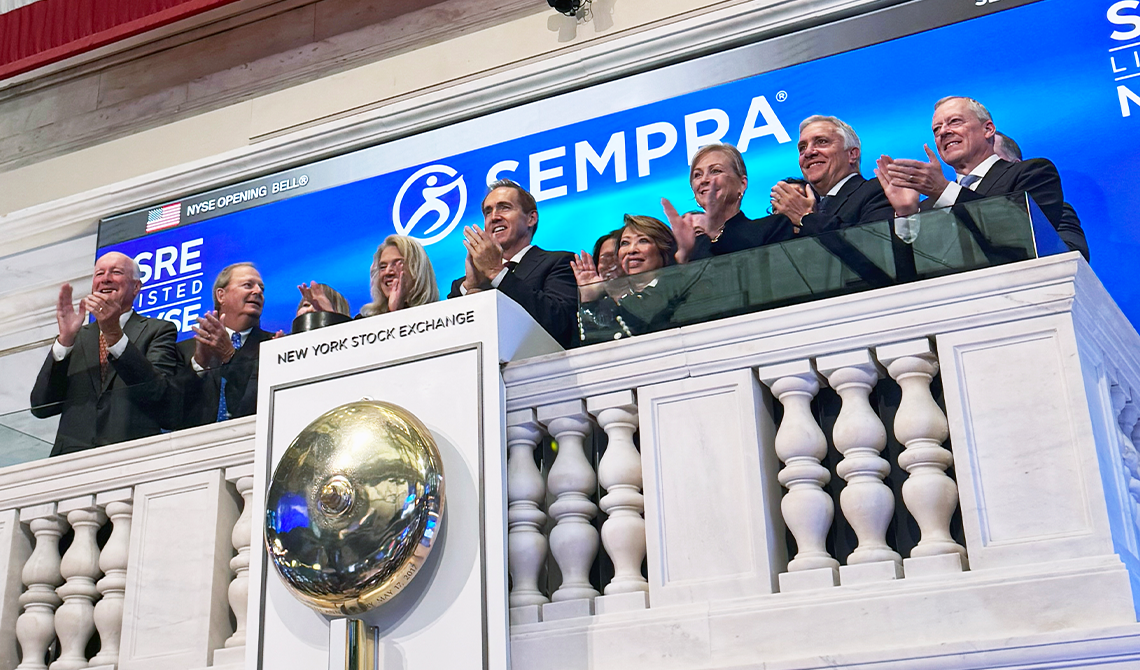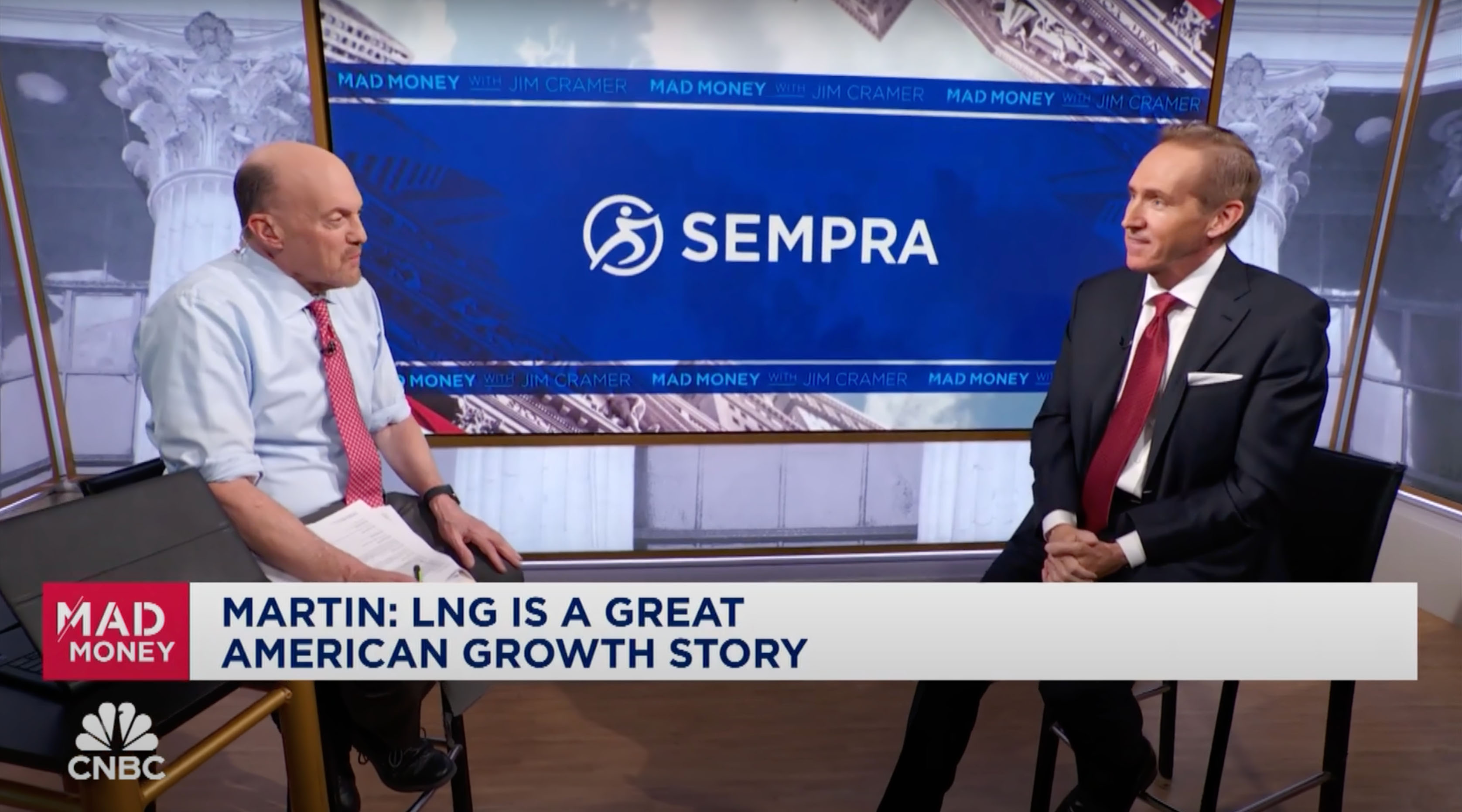
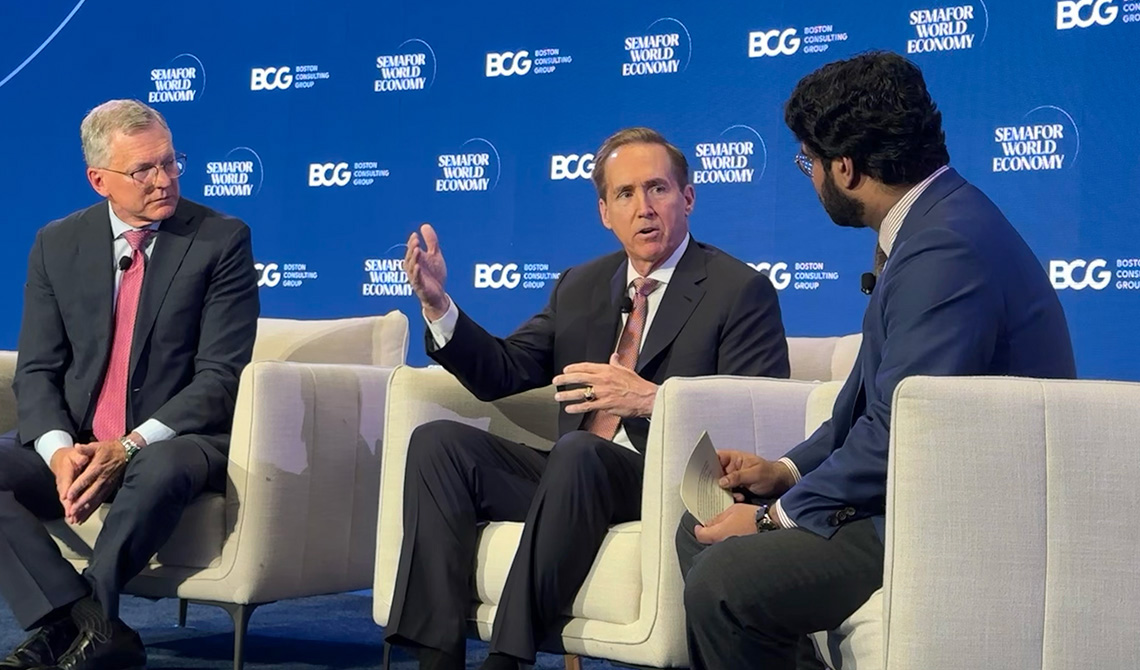
At Semafor World Economy 2026 in Washington D.C., Chairman and CEO Jeffrey W. Martin participated on a panel titled The Next Era of Global Growth and spoke on issues ranging from rising energy demand to America’s growing role in supplying energy markets.
Today, global GDP is roughly $126 trillion and the United States’ economy accounts for more than 25% of that figure. “Continuing to grow this country’s economy is the key to raising the standard of living for all Americans,” said Martin. With the reshoring of industry back into the U.S. and unprecedented levels of infrastructure investment being made to support the rollout of AI, electricity demand is increasing. “As a result, the utility sector is in a super cycle of growth as we look to support the continued expansion of America’s economy,” Martin said.
Meeting Rising Energy Demand
The strength of the U.S. energy system starts with its fundamentals, Martin told the audience.
“You have to grow America’s economy by investing thoughtfully and working with regulators so that, as you support higher levels of electricity production, you’re also allocating costs through the lens of managing affordability for the customer.”
Exceptional Growth in Texas
“Texas is ground zero for economic growth with record investments in the innovation and technology value chain, such as data centers,” Martin said. “We’re seeing higher levels of economic activity and we’re expecting Texas electricity demand to grow at roughly three to four times the national average.”
Martin used Sempra’s Texas-based electric utility, Oncor Electric Delivery Company LLC (Oncor), as an example. When Sempra purchased an 80% stake in the company in 2018, Oncor had a five-year capital plan of $7 billion. Today, Oncor’s 2026–2030 capital plan is $48 billion, while limiting the expected impact to residential rates to about 3%, or roughly the rate of inflation.
American Leadership
As part of Sempra’s strategy to simplify its business model and focus on growing its Texas and California utilities, Martin said the company made the decision to sell an equity stake in its liquefied natural gas (LNG) business, Sempra Infrastructure.
Recycling that capital back into its regulated utilities will improve Sempra’s ability to meet growing energy demand, while also supporting economic growth. That is reflected in the company's 2026–2030 capital plan, which stands at a record $65 billioni, with over 95% allocated to utility investments.
When questioned on growth in U.S. LNG exports, Martin said, “The United States continues to have a competitive advantage in the global LNG trade. We have the deepest capital markets, ample reserves of natural gas, low price volatility and the rule of law.”
The competitive advantage of U.S. energy exports was also echoed at the conference by International Energy Agency Executive Director, Dr. Fatih Birol, who said “Trustworthiness and predictability will be very important in the energy trade and energy security,” and that means buyers will increasingly prioritize security of supply from stable markets, while adding risk premiums to trade based on potential disruptions from various regions in the world.
Value of Balanced Energy Policies
When asked whether the U.S. should concede leadership in clean energy to China, Martin replied, “I don’t think we should concede an inch. Today, America has the leading and most competitive economy in the world, and, in large measure, it is a credit to our balanced energy policies.”
Martin went on to reference Sempra’s California utility, San Diego Gas & Electric Company (SDG&E), as demonstrating the benefits of balanced energy policies. SDG&E’s service territory has:
- Rooftop solar approaching 25% penetration;
- Approximately 50% of delivered electricity sourced from renewablesii;
- One of the highest penetration of rates of any large metropolitan area in electric vehicles (EV), with one in four car sales being an EV; and
- An industry-leading position in data science and wildfire mitigation.
“The United States continues to lead the world in innovation and technology, and promoting sound, balanced energy policies should extend our leadership advantage, while securing a growing and competitive economy for future generations of Americans,” Martin said.